Coding & Marking on Glass
Glass is hard, smooth and often wet from rinsing or cold filling. Marks must not weaken the container, and codes on returnable bottles may need to…
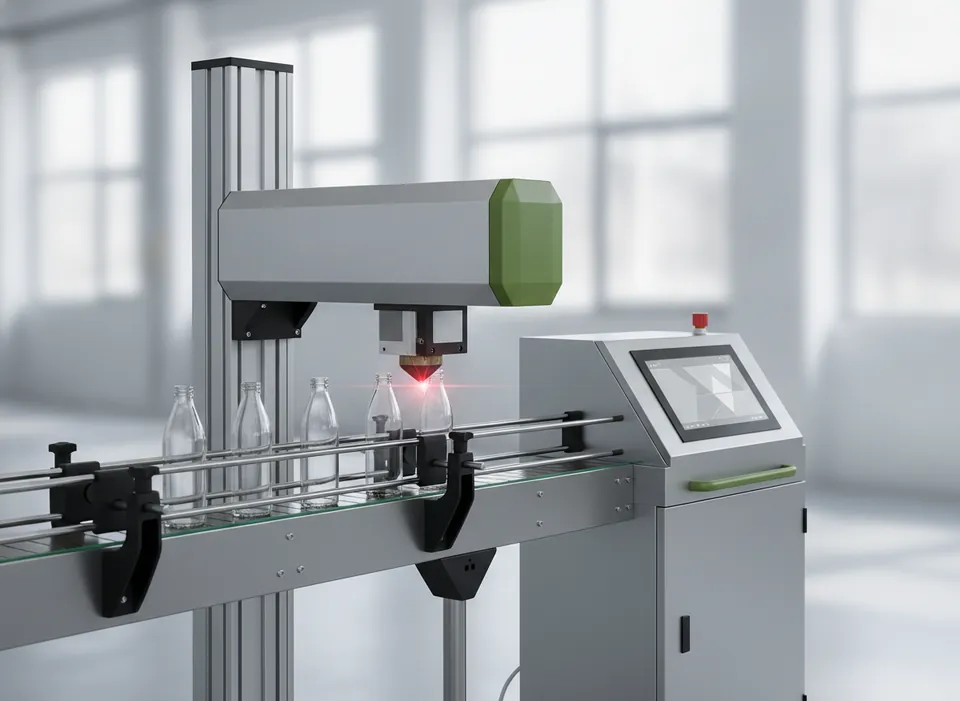
Working with glass
Glass is hard, smooth and often wet from rinsing or cold filling. Marks must not weaken the container, and codes on returnable bottles may need to be removable.
Practical tips
- Blow condensation off with an air knife before inkjet printing.
- Keep laser power as low as the required contrast allows to protect container strength.
- Test ink adhesion after pasteurisation or sterilisation, not just at the coder.
What works, and why
CO2 Laser Marking Machines
Engraves a fine frosted mark at high speed; the standard for one-way glass.
UV Laser Marking Machines
Marks without micro-cracks — preferred for vials, syringes and thin-walled glass.
Continuous Inkjet (CIJ) Printers
Prints through condensation; alkali-removable inks suit returnable bottles.
Labeling Machines
Applies paper or clear film labels and tamper seals.
Recommended for glass
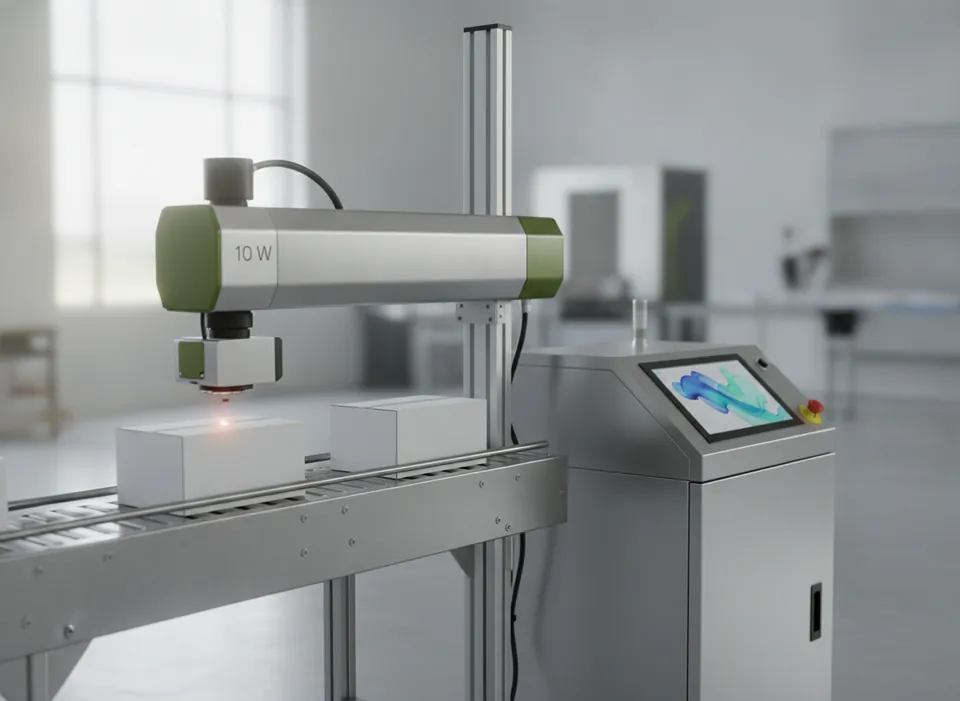
10 W CO2 Laser Coder
Economical CO2 coder for cartons, labels and paper sleeves.
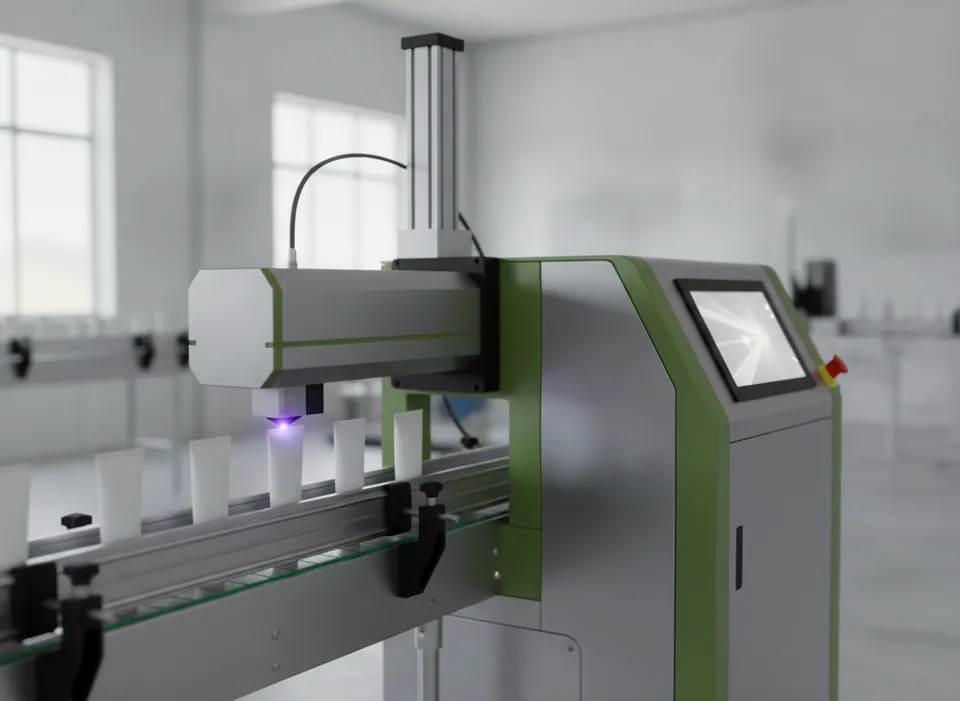
3 W UV Laser Coder
Entry UV coder for plastics, films and labels at moderate speeds.
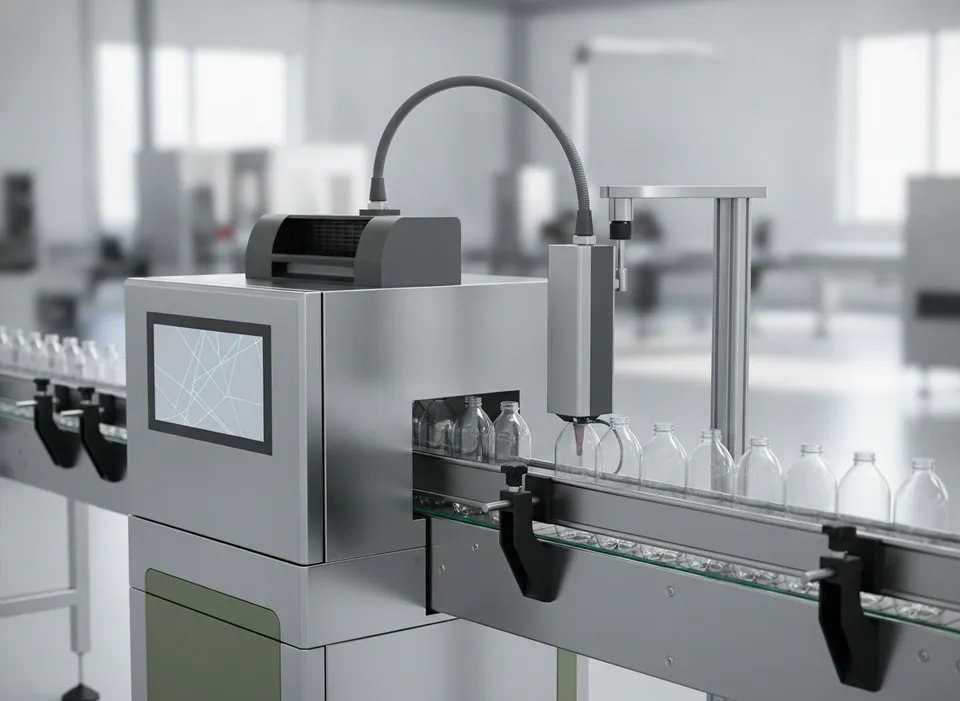
Entry-Level CIJ Printer
Straightforward date and batch coding for single-shift lines.
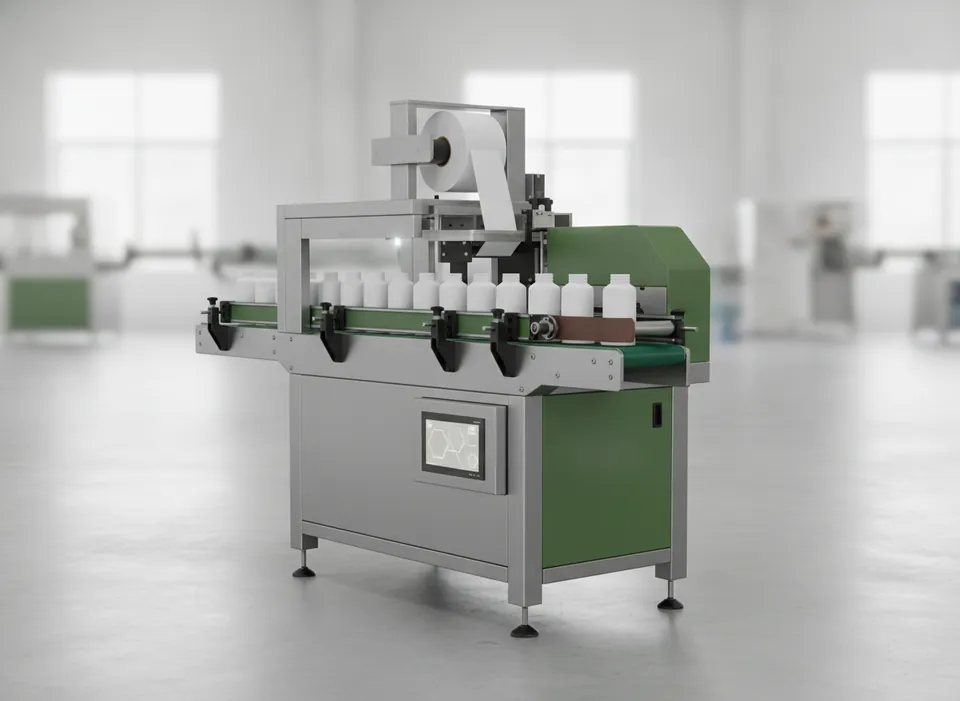
Wrap-Around Bottle Labelling Machine
Full or partial wrap labels on round containers.
Not sure which technology fits?
Send us samples. We will test the options and return marked pieces with our recommendation.